A Two-Bit Morning
1) Press release by the Potsdam Institute for Climate Impact Research
12/17/2013
Recognizing the Elephant in the Room: Future Climate Impacts across Sectors
A pioneering collaboration within the international scientific community has provided comprehensive projections of climate change effects, ranging from water scarcity to risks to crop yields. This interdisciplinary effort, employing extensive model inter-comparisons, allows research gaps to be identified, whilst producing the most robust possible findings. The results provide crucial insights for decision-making regarding mitigation efforts in the face of potential impact cascades. The analyses are to be published in a special feature of the Proceedings of the National Academy of Sciences that assembles the first results of the Inter-Sectoral Impact Model Intercomparison Project (ISI-MIP), which aims at bringing research on climate impacts onto a new level.
“There is an elephant in the room: current and future climate change impacts. But strangely, many people seem to be blind to it,” says Hans Joachim Schellnhuber, director of the Potsdam Institute for Climate Impact Research and co-author of the special feature’s introduction as well as several of its papers. “Many decision makers prefer to turn a blind eye to global warming consequences, while many scientists tend to focus on very specific aspects of climate change. So we resemble the fabled blind men, who unknowingly touch different parts of the same elephant: grasping the animal’s trunk, one of the men is convinced he has a snake in his hand, whilst one other mistakes the tail for a rope. To recognize the animal, they must talk to each other to properly identify the individual parts and to bring them together. This is exactly what this international project does.”
Weblink, once the article is published.
2. From The Guardian, a essay-let by Slavoj Žižek on the ‘Fake ‘Mandela Interpreter. Below the core paragraph:
[…] Jantjie’s performance was not meaningless – precisely because it delivered no particular meaning (the gestures were meaningless), it directly rendered meaning as such – the pretence of meaning. Those of us who hear well and do not understand sign language assumed that his gestures had meaning, although we were not able to understand them. And this brings us to the crux of the matter: are sign language translators for the deaf really meant for those who cannot hear the spoken word? Are they not much more intended for us – it makes us (who can hear) feel good to see the interpreter, giving us a satisfaction that we are doing the right thing, taking care of the underprivileged and hindered. […]
[full article here.]



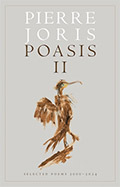 Poasis II: Selected Poems 2000-2024
 “Todesguge/Deathfugue”
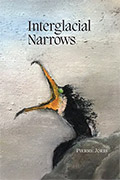 “Interglacial Narrows (Poems 1915-2021)”
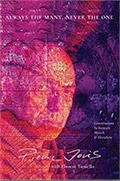 “Always the Many, Never the One: Conversations In-between, with Florent Toniello”
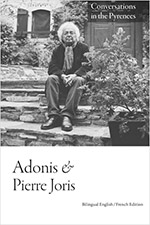 “Conversations in the Pyrenees”
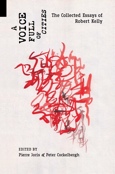 “A Voice Full of Cities: The Collected Essays of Robert Kelly.” Edited by Pierre Joris & Peter Cockelbergh
 “An American Suite” (Poems) —Inpatient Press
 “Arabia (not so) Deserta” : Essays on Maghrebi & Mashreqi Writing & Culture
 “Barzakh” (Poems 2000-2012)
 “Fox-trails, -tales & -trots”
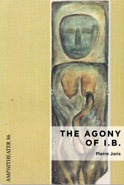 “The Agony of I.B.” — A play. Editions PHI & TNL 2016
 “The Book of U / Le livre des cormorans”
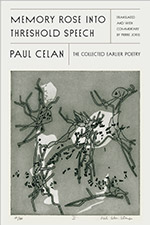 “Memory Rose Into Threshold Speech: The Collected Earlier Poetry of Paul Celan”
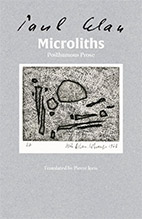 “Paul Celan, Microliths They Are, Little Stones”
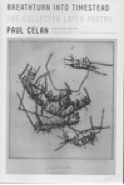 “Paul Celan: Breathturn into Timestead-The Collected Later Poetry.” Translated & with commentary by Pierre Joris. Farrar, Straus & Giroux
So, will the world end first or will it be Potsdam? Why don’t they stuff that into their computers and see what pops out?