The Midnight Disease
Definition of Hypergraphia
Hypergraphia: The driving compulsion to write; the overwhelming urge to write. Hypergraphia may compel someone to keep a voluminous journal, to jot off frequent letters to the editor, to write on toilet paper if nothing else is available, and perhaps even to compile a dictionary. Hypergraphia is the opposite of writer’s block.
Temporal lobe epilepsy is associated with hypergraphia. This association has been known at least as early as 1974 (Waxman SG, Geschwind N. Hypergraphia in temporal lobe epilepsy. Neurology. 1974;24:629-36). A number of prolific writer may have had temporal lobe epilepsy, including Byron, Dante, Dostoevsky, Molière, Petrarch, Poe, and Tennyson.
Hypergraphia has also been called the midnight disease.
Indeed, why the midnight disease? That time-slot seems pretty normal for normal writing to most. Right now, given my US-Europe jet-lag (that West-East displacement is the one I feel most) it is 4 a.m. that feels the likely moment when writing turns into mania. So I’ll stop here & try to get some shuteye.



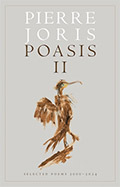 Poasis II: Selected Poems 2000-2024
 “Todesguge/Deathfugue”
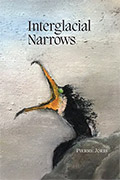 “Interglacial Narrows (Poems 1915-2021)”
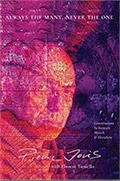 “Always the Many, Never the One: Conversations In-between, with Florent Toniello”
 “Conversations in the Pyrenees”
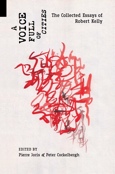 “A Voice Full of Cities: The Collected Essays of Robert Kelly.” Edited by Pierre Joris & Peter Cockelbergh
 “An American Suite” (Poems) —Inpatient Press
 “Arabia (not so) Deserta” : Essays on Maghrebi & Mashreqi Writing & Culture
 “Barzakh” (Poems 2000-2012)
 “Fox-trails, -tales & -trots”
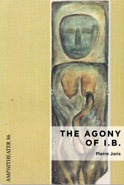 “The Agony of I.B.” — A play. Editions PHI & TNL 2016
 “The Book of U / Le livre des cormorans”
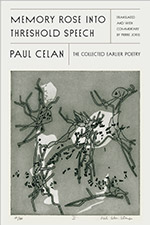 “Memory Rose Into Threshold Speech: The Collected Earlier Poetry of Paul Celan”
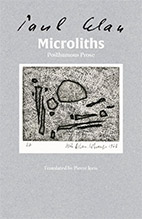 “Paul Celan, Microliths They Are, Little Stones”
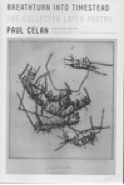 “Paul Celan: Breathturn into Timestead-The Collected Later Poetry.” Translated & with commentary by Pierre Joris. Farrar, Straus & Giroux