Global warming time bomb trapped in Arctic soil

And according to one commentary on the research, current models of climate change have not taken this extra source of greenhouse gas into account.
Scientists have long known that organic carbon trapped inside a blanket of frozen permafrost covering one fifth of the world’s land mass would, if thawed, release greenhouse gases into the atmosphere.
But until now they simply did not have a good idea of how much carbon is actually locked inside this Arctic freezer.
To find out, a team of American researchers led by Chien-Lu Ping of the University of Alaska Fairbanks examined a wide range of landscapes across North America.
They took soil samples from 117 sites, each to a depth of at least one metre, in order to provide a full assessment of the region’s so-called “carbon pool.”
Previous estimates of the Arctic carbon pool relied heavily on a relative handful of measurements conducted outside of the Arctic, and only to a depth of 40 centimetres (15.5 inches).
The study, published in the British journal Nature Geoscience, found that the stock of organic carbon “is considerably higher than previously thought” — 60 percent more than the previously estimated.
This is roughly equivalent of one sixth of the entire carbon content in the atmosphere.
And that is just for North America. The size and mix of landscapes in the northern reaches of Europe and Russia are about the same, and probably contain a comparable amount of carbon-dioxide producing matter currently held in check only by the cold, the study said.
And the danger of a thaw is real, note climate scientists.
The Nobel Prize-winning UN panel of climate change scientists project temperature increases by century’s end of up to six degrees Celsius (10.8 degrees Fahrenheit) in the Arctic region, which is more sensitive to global warming than any other part of the planet.
Commenting on the research, Christian Beer of the Max Planck Institute in Jena, Germany, pointed out that the climate change models upon which future projections are based, do not include the potential impact of the gases trapped frozen Arctic soils.
“Releasing even a portion of this carbon into the atmosphere, in the form of methane or carbon dioxide, would have an significant impact on Earth’s climate,” he noted in his commentary, also published in Nature Geoscience.
Methane, another greenhouse gas, is less abundant than carbon dioxide but several times more potent as a driver of global warming.



 Poasis II: Selected Poems 2000-2024
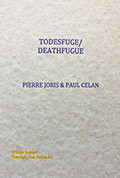 “Todesguge/Deathfugue”
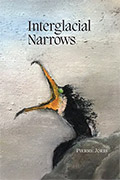 “Interglacial Narrows (Poems 1915-2021)”
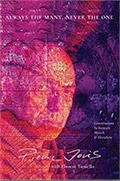 “Always the Many, Never the One: Conversations In-between, with Florent Toniello”
 “Conversations in the Pyrenees”
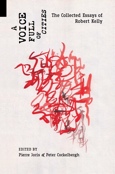 “A Voice Full of Cities: The Collected Essays of Robert Kelly.” Edited by Pierre Joris & Peter Cockelbergh
 “An American Suite” (Poems) —Inpatient Press
 “Arabia (not so) Deserta” : Essays on Maghrebi & Mashreqi Writing & Culture
 “Barzakh” (Poems 2000-2012)
 “Fox-trails, -tales & -trots”
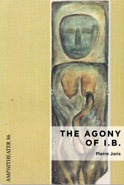 “The Agony of I.B.” — A play. Editions PHI & TNL 2016
 “The Book of U / Le livre des cormorans”
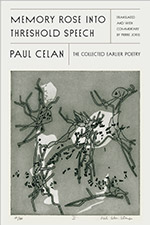 “Memory Rose Into Threshold Speech: The Collected Earlier Poetry of Paul Celan”
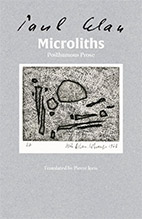 “Paul Celan, Microliths They Are, Little Stones”
 “Paul Celan: Breathturn into Timestead-The Collected Later Poetry.” Translated & with commentary by Pierre Joris. Farrar, Straus & Giroux
Pierre, I do not buy anymore into these breathless hysteria-loaden news.
Please see here:
http://www.climate4you.com/images/HadCRUT3%20GlobalMonthlyTempSince1985.gif
and listen to late Marcel Leroux’s interview (link at start page of http://meteo.lcd.lu)
Cheers, Francis