On opacity (2)
And this further comment by Paul Celan:
Leave the poem its darkness; maybe — maybe! — it will give, when the excessive brightness, which the exact sciences today already know how to put before our eyes, will have changed the very ground of the human genotype, — maybe it will give, on the ground of this ground, shade in which man can reflect on his humanity.
And one more:
The poem speaks of the first and most accidental things as if they were the last ones: The near is at the same time the infinitely distant; if it has the opacity of what stands opposite it, it also has the brightness of the faraway.


(Visited 78 times, 1 visits today)

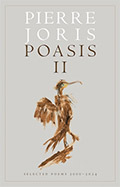 Poasis II: Selected Poems 2000-2024
 “Todesguge/Deathfugue”
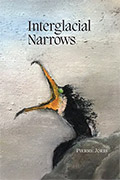 “Interglacial Narrows (Poems 1915-2021)”
 “Always the Many, Never the One: Conversations In-between, with Florent Toniello”
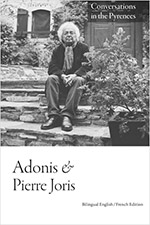 “Conversations in the Pyrenees”
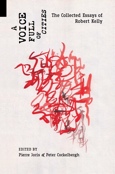 “A Voice Full of Cities: The Collected Essays of Robert Kelly.” Edited by Pierre Joris & Peter Cockelbergh
 “An American Suite” (Poems) —Inpatient Press
 “Arabia (not so) Deserta” : Essays on Maghrebi & Mashreqi Writing & Culture
 “Barzakh” (Poems 2000-2012)
 “Fox-trails, -tales & -trots”
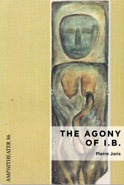 “The Agony of I.B.” — A play. Editions PHI & TNL 2016
 “The Book of U / Le livre des cormorans”
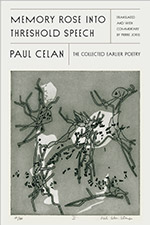 “Memory Rose Into Threshold Speech: The Collected Earlier Poetry of Paul Celan”
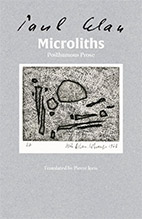 “Paul Celan, Microliths They Are, Little Stones”
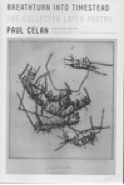 “Paul Celan: Breathturn into Timestead-The Collected Later Poetry.” Translated & with commentary by Pierre Joris. Farrar, Straus & Giroux
but when the “human genotype” changes to android and cyborg, will these latter “reflect on humanity”? or on celan’s “tree-high thought” as it sheds its “shade in which” to reflect?
darkness, brightness; opacity, brightness… where is “the ground of this ground”?