More re: Debray on Palestine
“The diplomatic process has not taken enough account
of developments on the ground and their consequences.
– What developments? – To begin with, colonisation.”Dennis Ross,
former American Near East envoy,
questioned about the errors committed
at the Camp David summit (2000).
Interesting to note that where Debray’s French version (I have not been able to locate the English original of the Ross interview) of the quote uses the term “colonisation,” the English translation, which incorporates the epigraph as the first sentence of the opening paragraph of the body of the article, uses the term “settlements:”
Dennis Ross, formerly the United States envoy to the Middle East, admitted back in 2000 that mistakes had been made in the 1978 Camp David accords: the diplomatic process had not taken enough account of developments on the ground, especially the settlements.
Now, it seems to me that “settlements” is ideologically speaking, the weaker term, whereas “colonization” is much wider and stronger in describing what is going on in a long-drawn out series of events of which “settlements” are only one partial aspect, even if an important one, as Debray’s article will show, pointing out for example the miss use that can be made of claims for “dismantling” of settlements:
Some may take comfort in these ideas:
• since it was possible to withdraw settlements from Gaza, it should be possible in the near future in the West Bank. That is to ignore the fact that the withdrawal of 8,000 settlers from one place in Gaza was soon followed by the unpublicised installation of 20,000 settlers in another (the West Bank/Jerusalem). Gaza is not part of the promised land, whereas Judea and Samaria are its backbone. Sharon did not make any secret of the fact that withdrawal on the margins would be compensated by strengthening the Israeli presence elsewhere (438,000 settlers to date, including 192,910 in East Jerusalem);
• the dismantling of four small settlements in the north (1,000 settlers) and the proposed concentration of 60,000 settlers in the most populous blocs, Maale Adumim, Ariel and Gush Etzion, will create a free space. But with the settlements linked in a continuous string under cover of the security wall, the West Bank has been effectively cut in two. The wall separates Palestinians from each other even more than it separates them from the Israelis.
In view of this, it seems important to me to keep the word “colonisation” and its much wider and more radical critique – even if Ross’ original English word was another term, which I would be happy if someone would inform me about (and am sure that I will be informed about this soon, given that any time I post on Palestine, I get a much vaster number of instant responses than for any other subject – most of which responses seem however to come from roaming pro-Israeli “fact-checkers”.)



 Poasis II: Selected Poems 2000-2024
 “Todesguge/Deathfugue”
 “Interglacial Narrows (Poems 1915-2021)”
 “Always the Many, Never the One: Conversations In-between, with Florent Toniello”
 “Conversations in the Pyrenees”
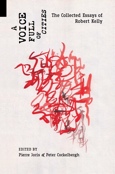 “A Voice Full of Cities: The Collected Essays of Robert Kelly.” Edited by Pierre Joris & Peter Cockelbergh
 “An American Suite” (Poems) —Inpatient Press
 “Arabia (not so) Deserta” : Essays on Maghrebi & Mashreqi Writing & Culture
 “Barzakh” (Poems 2000-2012)
 “Fox-trails, -tales & -trots”
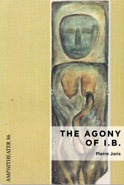 “The Agony of I.B.” — A play. Editions PHI & TNL 2016
 “The Book of U / Le livre des cormorans”
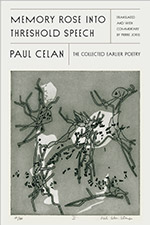 “Memory Rose Into Threshold Speech: The Collected Earlier Poetry of Paul Celan”
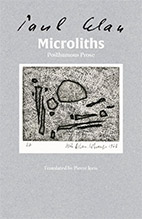 “Paul Celan, Microliths They Are, Little Stones”
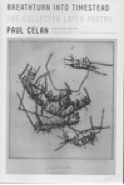 “Paul Celan: Breathturn into Timestead-The Collected Later Poetry.” Translated & with commentary by Pierre Joris. Farrar, Straus & Giroux